Full scan: US$29 per domain, paid after verification.
We only scan domains verified by their own owner.
Not ready to verify? Try the free preview →How it works
Three steps, in this order: no scan gets queued until the first two are confirmed.
Add a DNS TXT record or upload a file to your site's root. We confirm you control the infrastructure before touching it. If it doesn't match, we show you exactly what's wrong and you try again. Nothing is charged until the domain is verified.
auditly-verify=3f9a…Payment is verified first. The job only gets queued once the gateway confirms it, never before.
$29 USD · one-timeA summary lands in your inbox and the full PDF report follows, usually within minutes.
auditly-example.com.pdf
Every check maps to a real attack surface
The same checks the desktop product runs, straight against your site.See all 18 modules and the limits they run under →
- ConfigurationHeaders and TLS: CSP, HSTS, clickjacking, cookies without flags, certificates and HTTP-to-HTTPS redirects.
- InjectionXSS, SQLi and CORS: Active probes on parameters and forms, plus misconfigured cross-origin policies.
- High impactExposed secrets: API keys, tokens and credentials leaked in client-side JavaScript or in accessible files.
- ExposureSensitive files: .env, .git, backups and admin paths that should never be public.
- DependenciesVulnerable libraries: Front-end versions with known CVEs, cross-checked against KEV and EPSS to prioritize.
- BackendFirebase rules: Collections with anonymous reads and permissive real-time security rules.
You finding it today is a fix. An attacker finding it is a breach.
The scan runs live and the report prioritizes what to resolve first, in plain language. Not to scare you: so you can act in time, with a plan and the calm of knowing exactly where you stand.
- A clear verdict and a security grade
- Findings ordered by severity
- How to fix each one, step by step
- Downloadable PDF, ready to share
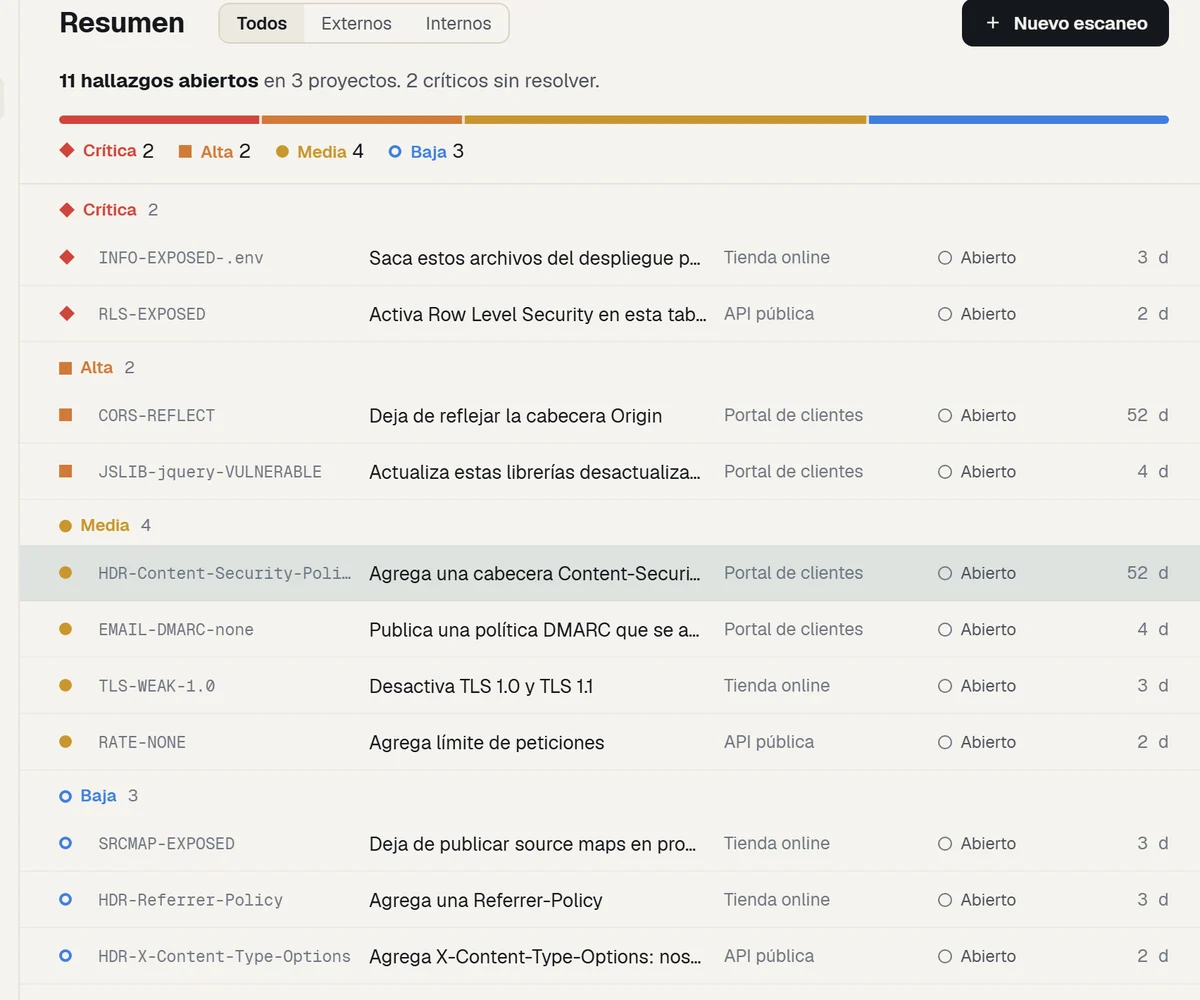
Every finding comes with the evidence we observed, why it matters and the exact change that fixes it, ordered so you know what to do first.
Add a Content-Security-Policy header
No CSP is set, so an injected script would run with full page privileges.Replace Access-Control-Allow-Origin: * with an allowlist
A wildcard lets any site's JavaScript read this response, which is fine for public data but risky if anything is user-specific.Add a Referrer-Policy
Full URLs, including tokens, can leak to third parties via the Referer header.Add X-Content-Type-Options: nosniff
Without it, some browsers may MIME-sniff and render a response as HTML/JS.Add a Permissions-Policy
Powerful browser APIs stay available by default to any script running on the page.Audit SMBs? Do it at scale with Auditly Desktop.
The same scan engine, in a desktop app for your team. Audit clients in any sector and deliver reports under your own brand.
- Local or shared network mode
- Reports under your brand
- Clients in any sector
- The same engine as the web
Become an Auditly partner
Resell audits, fold Auditly into your service offering, and access partner pricing. For agencies, consultancies and MSPs that want to add security to their portfolio.
I want to be a partner →